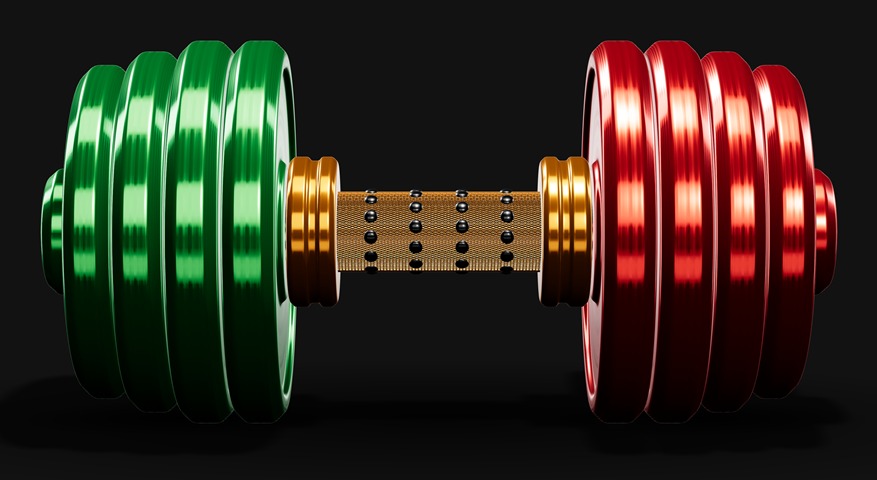
New-lifter shopping lists have become absurd: belts, straps, sleeves, pre-workout, lifting shoes — before a single session is logged. Here's the truthful version: your first year needs very little, and what it needs is cheap.
Flat-soled trainers (or any stable shoe you own), a water bottle, and a towel. That's the actual entry requirement for month one — everything else is optional until your training says otherwise.
Worth adding early: a set of resistance bands for warm-ups and mobility, and liquid chalk if grip becomes the limiting factor on pulls. Total damage: little more than a takeaway.
Lifting straps become useful when heavy pulls outgrow your grip — a good problem, months away. A belt belongs on genuinely heavy compound sets, not on machines. Knee sleeves are warmth and comfort for accumulating leg volume; lifting shoes reward technique you haven't built yet.
The pattern: gear should solve a problem your training has actually presented. Buying the solution before the problem is how kit ends up in drawers.
This is the quiet advantage of tracking everything: your own sessions show you when grip fails before your back does, when knees want warmth, when heavy singles justify a belt. Your training does the shopping list.
Until then, spend the gear money on the boring multipliers — decent food, better sleep, and turning up. No sleeve improves those.
Train within your limits. This is general information, not medical advice: speak to your doctor before starting a new programme, especially if you have a health condition or an injury, are pregnant, or take medication.